In 2024, the World Economic Forum and the McKinsey Health Institute published a report about the disparities women face in accessing health care. Closing the women’s health care gap, the findings show, could boost economies worldwide by as much as $1 trillion by 2040 – and collectively give women millions more years of life.
At the University of South Carolina, faculty members in multiple fields are working to address these disparities. From experts in public health and exercise science to nursing and primary care, USC researchers are tackling the issues that underlie the women’s health care gap while contributing to the health and well-being of all South Carolinians.
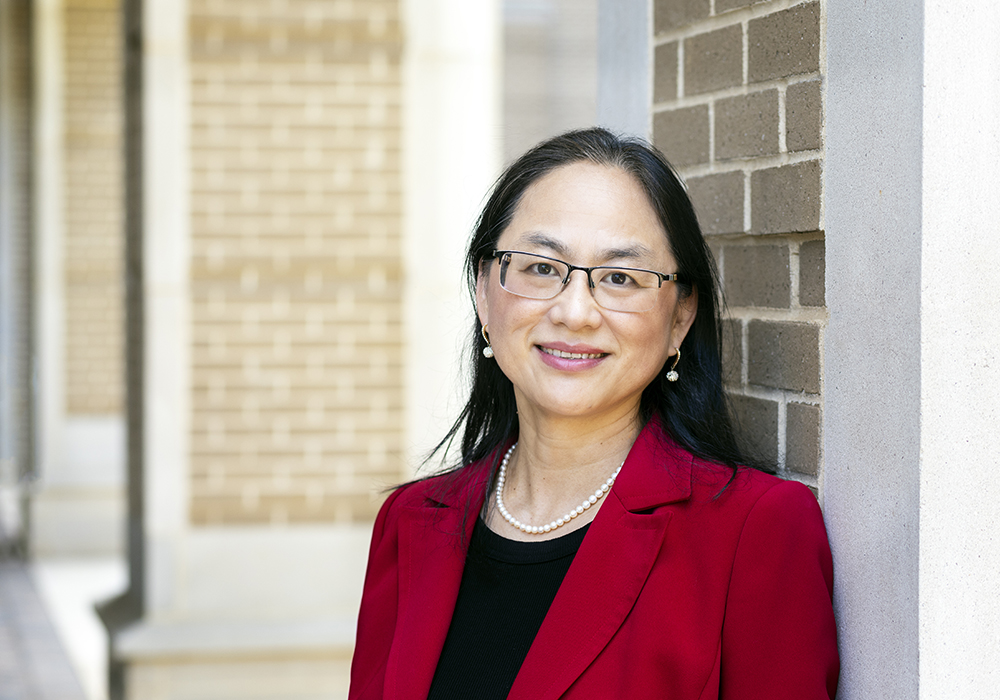
Jihong Liu, professor of epidemiology in the Arnold School of Public Health, studies the impact of maternal health care for women and their children. While one branch of her research focuses on developmental origins of disease – how the mother’s health in pregnancy affects her children’s – Liu also examines how a woman’s experiences during pregnancy can affect her own health for a lifetime.
“Pregnancy is a critical time for mothers, especially as an opportunity for education,” Liu says. “Before pregnancy, a person may have been smoking or drinking a lot, and because of the pregnancy, she quits. If we can educate women to help them sustain those healthy choices after pregnancy, that would be very beneficial.”
Liu says pregnancy is a time when women may find out about an issue or risk factor for her health she would not have known about otherwise. For example, if a pregnant person is diagnosed with gestational diabetes, she should take note because the risk of developing Type 2 diabetes later in life is going to be higher. The same is true for women who develop hypertension in pregnancy, which can reveal or even trigger underlying health issues that increase their risk of cardiovascular disease.
“For many women, pregnancy may be one of the first times in life when they see a doctor on a regular basis, and that is how they discover they have a chronic health condition,” Liu says.
Pregnancy can be a window of opportunity for a woman to learn more about her own health and how to take care of her body. It’s one of the reasons why prenatal health care is so important – and why the postpartum period matters just as much as the pregnancy.
“Women deliver the baby and then put all their energy into caring for the newborn, so they don’t pay as much attention to their own health. This is not good, so medical associations have increasingly focused on postpartum care,” she says. “They now emphasize the post-partum period as the ‘fourth trimester,’ a critical phase of maternal care.”
“We find that the program (Healthy Start) definitely helps women get more adequate prenatal care. Participants are more likely to get enrolled in WIC and more likely to reduce smoking. I think we see such positive effects because the program provides targeted care based on women’s needs.”
One issue Liu has observed in post-partum care is that women go from regularly seeing their OBGYN back into the care of a general practitioner – if they go back at all. Valuable information, like a diagnosis of gestational diabetes, can slip through the cracks. The patient may not know which information is important, and so she isn’t able to advocate for herself as well.
“There is this disconnect between the OBGYN and the primary care provider, leaving women to feel as though they are starting over with someone new. Without effective care transitions, the clinician may have little knowledge of what occurred during pregnancy, creating missed opportunities for prevention care.”
Liu says health care systems could close this care gap by employing community health workers, who would help patients stay engaged in their care.
“This is a person who would help the patient understand the doctor’s notes after their visit, who would check in on how things are going or who might be able to listen to the patient’s concerns,” she says.
Liu has seen the community health work model in action through her extensive work with Prisma Health’s Healthy Start (Midlands and Upstate). Healthy Start serves communities across the U.S. where the infant mortality rates are 1.5 to 2 times higher than the national average. Through community health workers, the program offers services and support for financially disadvantaged and underserved women and their babies, who are at increased risk for adverse health outcomes.
In 2018, Liu took on the role of evaluator for the program and has analyzed more than 20 years of data on the effectiveness of Healthy Start in South Carolina. Liu’s findings laid the groundwork for Prisma Health to expand the program to six counties in the Upstate in 2023. While the rate of infant mortality hasn’t changed as a result of the Healthy Start program, Liu says other metrics have improved significantly, such as birth weight.
“We find that the program definitely helps women get more adequate prenatal care. Participants are more likely to get enrolled in WIC and more likely to reduce smoking.”
With 18 months of postpartum support, Liu says women enrolled in Healthy Start are also encouraged to stick with the beneficial changes they made during pregnancy.
“I think we see such positive effects because the program provides targeted care based on women’s needs,” she says.
In addition to her work with Healthy Start, Liu is also partnering with healthcare providers at Prisma Health to monitor blood pressure in postpartum women who had hypertensive disorder in pregnancy. The study is funded by the Duke Endowment.
“Remote monitoring allows us to track their symptoms daily. Then we’re using AI to process the data and flag any study participants who need follow up with a provider,” she says.
Liu also plans to study remote monitoring for participants at risk of high blood sugar after gestational diabetes. If this new technology proves useful, she hopes to see clinicians use it in the future to improve outcomes for postpartum women.
Learn how another USC researcher is looking to AI to help close the women's health care gap.