In 2024, the World Economic Forum and the McKinsey Health Institute published a report about the disparities women face in accessing health care. Closing the women’s health care gap, the findings show, could boost economies worldwide by as much as $1 trillion by 2040 – and collectively give women millions more years of life.
At the University of South Carolina, faculty members in multiple fields are working to address these disparities. From experts in public health and exercise science to nursing and primary care, USC researchers are tackling the issues that underlie the women’s health care gap while contributing to the health and well-being of all South Carolinians.
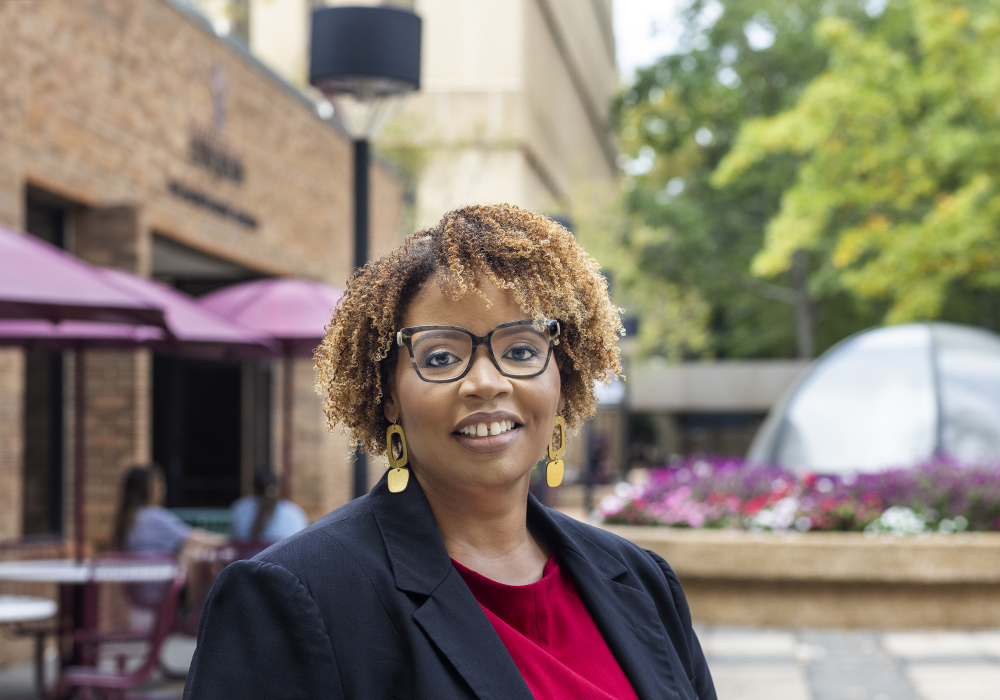
Heart disease is the No. 1 killer of women in the United States, but women often face delays in receiving a cardiovascular diagnosis. Jewel Scott, a board-certified family nurse practitioner and College of Nursing faculty member, says young women are more likely to be turned away from an emergency room because practitioners mistake their symptoms for something else.
“For a long time, cardiovascular disease was seen as a men’s health problem,” she says. “We have a long history of women being understudied and not being a part of research on a level that allows us to look at some of the differences between women and men.”
An assistant professor in the Department of Biobehavioral Health and Nursing Science, Scott focuses her research on cardiovascular disease in women, particularly young women of color. Her work aims to understand how the health care system identifies and addresses cardiovascular risk factors, such as hypertension, in young adult women. She also focuses on bridging the gap in how heart health is communicated to young women, who are often left out of prevention messaging altogether. But making lasting change will require more than just updating medical literature and guidelines.
“It means engaging more young women in research, being thoughtful in how we communicate risk and correcting the biases built into our systems,” she says. “Even the way we label the symptoms that women present with when they’re having a heart attack: we call them ‘atypical.’ By doing so, we’re saying that men’s symptoms are ‘typical,’ or the ‘norm,’ and women’s are the exception. That just speaks to the bias that’s been woven into our research.”
Such bias is also prevalent in the way the medical research has historically understudied people of color, as the researchers traditionally studied white male participants. With many differences in risk factors, Black Americans bear a disproportionate risk of heart disease, yet this population statistically trails behind their white counterparts in receiving timely diagnosis and treatment.
“We want to talk with these patients and find out if they feel like they have what they need to advocate for themselves. We also want to talk to nurses and learn from their experiences. Do we as practitioners always recognize when a patient is self-advocating?”
Black women are the population most likely to face delays in diagnosis. Moreover, cardiac events for Black women are more likely to be fatal than for white women. Hispanic women also fare worse than white women. And overall, outcomes of cardiac events are worse for women in general than for men.
Scott is looking at this problem through multiple lenses. Biology plays a role, but Scott says socioeconomic disparities within and among these groups play an even bigger part.
“If you’re working a minimum wage job, you can’t afford to pay out of pocket for health insurance because your wage is not even going to allow you to have safe, secure housing. And when you go to the grocery store, you’re not going to be able to afford the most nutritious food,” she says.
“There are so many things connected to socioeconomic status and conditions of daily living that are not biological. And I don’t want to discount the role of behaviors– I have yet to meet a patient who didn’t know smoking is bad for you – but there are so many things that influence behaviors.”
Patients may have multiple factors that make it harder to engage in the best health care or to make healthier choices. Scott believes the onus is on the health care system to help patients address these issues.
“It’s not just that patients need to try harder or do better. We have to change the systems and structures that are making it harder for people to have optimal health,” she says.
Scott herself is working to do just that by addressing one of the main reasons women get left behind in health care settings: Some practitioners just don’t listen to them.
“That comes up over and over again – in my practice and in my research,” she says. “When patients present to their health care provider, they don’t feel like their knowledge of their own bodies or their concerns are being heard. I’m a patient as well as a practitioner, and I’ve had my own experience of sitting in the ER and not being listened to.”
This fall, Scott partnered with the Midlands chapter of the National Black Nurses Association to hold listening sessions with Black women and people who have given birth to hear about their experiences. Sponsored by the South Carolina Clinical & Translational Research Institute, the community project will allow Scott’s team to gather information that will help clinicians and health care practitioners learn what to do differently in patient interactions.
“We want to talk with these patients and find out if they feel like they have what they need to advocate for themselves,” she says. “We also want to talk to nurses and learn from their experiences. Do we as practitioners always recognize when a patient is self-advocating?”
Scott says women, particularly women of color, are more likely to be labeled as difficult when advocating for themselves. Scott hopes these listening sessions will be a step toward changing that.
To achieve change, health care providers may need to examine the systems and standards they use every day. Scott says one of her colleagues has instituted a standard bias check before proceeding with patient care. His care team stops to ask themselves, “Is there anything that could be influencing this decision? Is there any way bias is happening here?”
“It’s the same idea when a surgeon stops before cutting to make sure they’re working on the correct leg. That’s important,” she says. “Another thing that health care providers and nurses can do is being advocates for our patients – being willing to speak up for them.”
Learn how another USC professor is advocating for better maternal health care.