September 14, 2026 | Erin Bluvas, bluvase@sc.edu
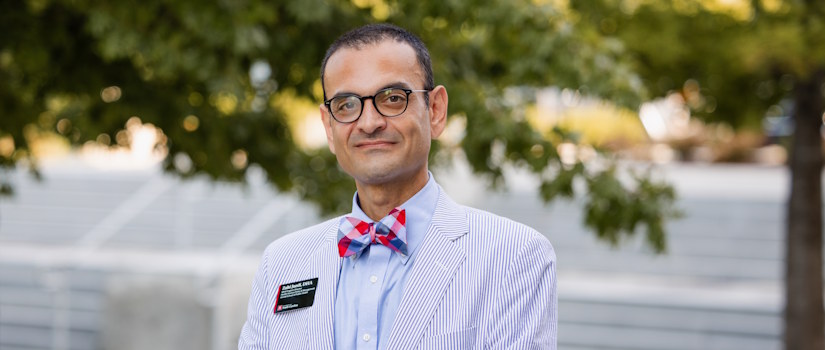
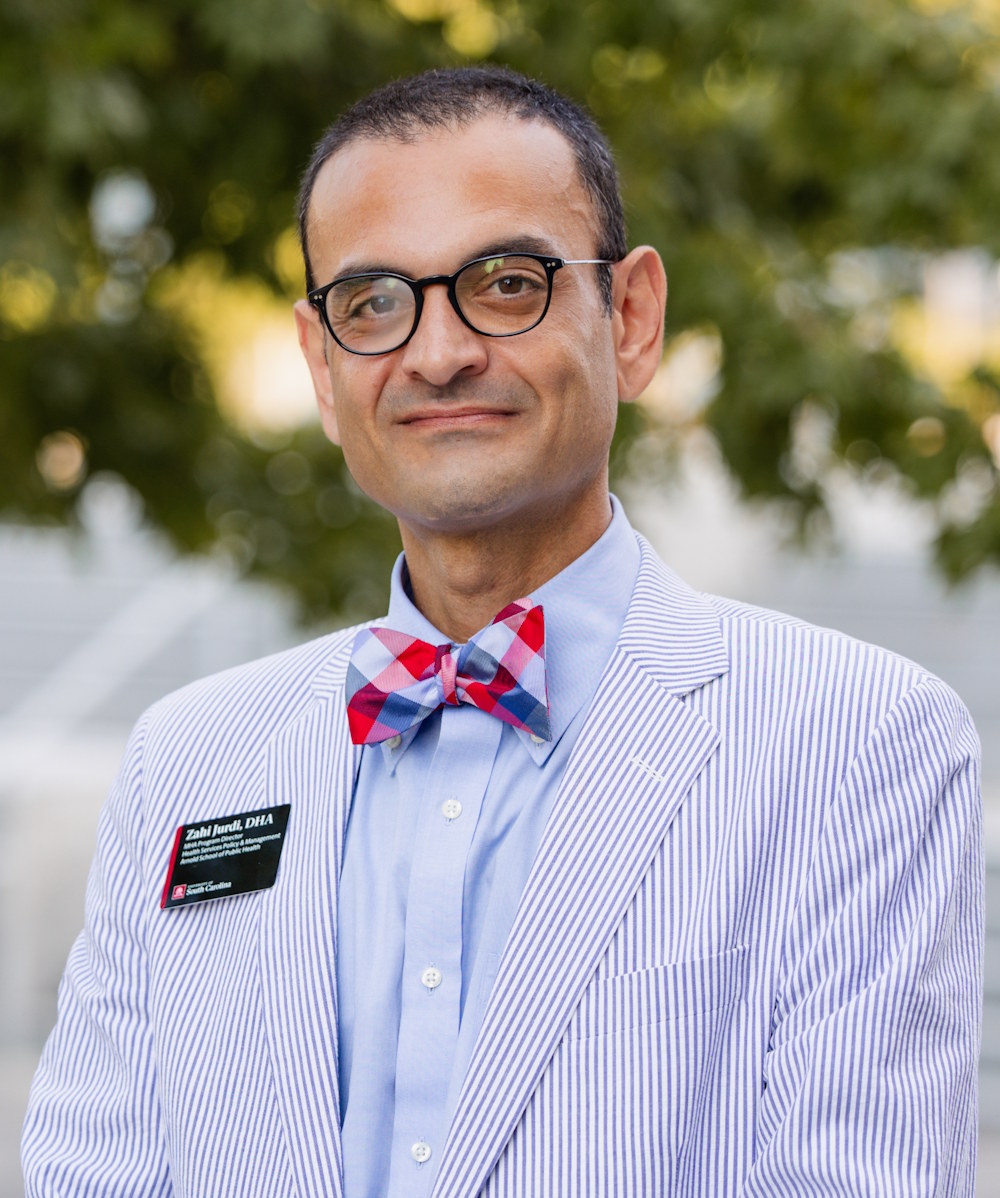
The Department of Health Services Policy and Management recently welcomed a new director for their nationally-recognized Master of Health Administration (MHA) program. Clinical associate professor Zahi Jurdi joined the Arnold School in May, bringing with him a passion for helping students become healthcare leaders that improve employee culture and patient outcomes.
“I knew of Zahi because of his leadership in health administration education, and I was impressed from our very first conversations,” says HSPM chair Brad Wright. “Getting to know him during the search process only reinforced that initial impression. He brings tremendous energy and enthusiasm to the role, a deep understanding of South Carolina’s healthcare landscape, and years of experience in healthcare administration and MHA program leadership. Just as importantly, Zahi cares deeply about the people around him and is passionate about developing the next generation of healthcare leaders. I’m excited to see him take our already outstanding MHA program to new heights.”
Growing up with two parents employed in the radiology field, Jurdi knew he wanted to work in healthcare. He remembers going to work with his dad and watching him read x-rays. He also remembers that after he got braces, he wanted to become an orthodontist.
And Jurdi remembers when he realized that he could make an even bigger impact if he moved beyond the one-on-one interactions with patients to improve their entire healthcare experience.
“I was 19 years old, and my mom had just had back surgery, so I was staying with her for a couple weeks and giving her injections,” he recalls. “She was so apologetic to me for the inconvenience, even though she was the vulnerable patient in pain. That’s when I knew I wanted to help make patient experiences and our health systems better.”
While Jurdi was finishing up his biology degree at The Ohio State University, he began hearing about the world of health administration. Working in management and leadership – rather than in a clinical role – sounded perfect to him, and he enrolled in Georgia Southern University’s MHA program.
After completing his master’s program, Jurdi moved from Savannah up the East Coast to complete an Administrative Residency at Johns Hopkins’ Center for Innovation in Quality Patient Care (now the Armstrong Institute for Patient Safety and Quality). They then hired him full-time, and, over the next seven years, Jurdi gained experience in various roles related to project management, practice administration and patient experience. He was getting great hands-on experience, but Jurdi knew that he might want to work in academia down the road, so he enrolled in a hybrid Doctor of Health Administration program at the Medical University of South Carolina.
“During my time in hospital administration, I worked in multiple team settings with various reporting structures and levels,” Jurdi says. “This experience really helped me understand the importance of an engaged work culture and preparing the next generation of leaders. Not every manager is a natural leader; most of us need guidance to become one. I realized that I could impact the people I worked with directly or I could impact an infinite number of patients and employees by training students to become healthcare leaders.”
For three years, Jurdi completed online coursework during the week and flew to Charleston once each semester for a long weekend of learning with his cohort of classmates. By the time he was wrapping up his degree, his old department at Georgia Southern had heard he was returning to academia, and they recruited him to eventually lead their MHA program. Three years after that, MUSC came calling for the same reason. Then it was Wright’s turn to recruit Jurdi to the Arnold School.
“One of the things I’ve learned over the years is the importance of relationships,” Jurdi says. “Technical aptitude is great, but building connections and talking to people is critical – especially in this field.”
In addition to valuing connections, Jurdi has two criteria for helping him determine whether he’ll make a career move. The first is whether the new place is growing – not necessarily in headcount, which is true for the Arnold School – but it could be something less tangible like mindset or values. The second is whether he aspires to be like existing leadership. Both held true for Jurdi during his interviews at USC, and he accepted his new role encouraging students to do the same in their healthcare careers.
“We’re not just providing students with a degree,” Jurdi says of his role as MHA director. “We’re here to help them self-actualize – to identify their purpose in working in healthcare. Our job is to help our students position themselves to deliver on that purpose and that legacy.”